





5 months ago
Body
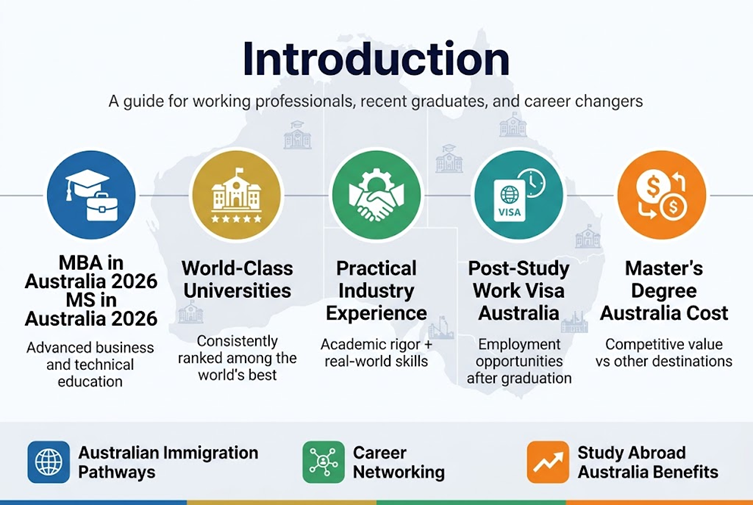
Australia has become a top destination for international students seeking advanced business and technical education, with MBA in Australia and MS in Australia programs offering exceptional value for career advancement. This guide is designed for working professionals, recent graduates, and career changers who want to understand why Australia stands out among global education destinations.
Australian universities consistently rank among the world's best, with programs that blend academic rigor with practical industry experience. The country's strong post-graduation employment policies make it an attractive choice for students planning their next career move.
We'll explore Australia's world-class education system that puts students on the global map, examine the compelling post-study work visa Australia opportunities and Australian immigration pathways that help graduates build long-term careers, and break down the master's degree Australia cost compared to other popular study destinations. You'll discover how study abroad Australia benefits extend far beyond the classroom, creating opportunities for personal growth and professional networking that last a lifetime.
World-Class Education System and Global Recognition
Top-ranked Universities with International Accreditation
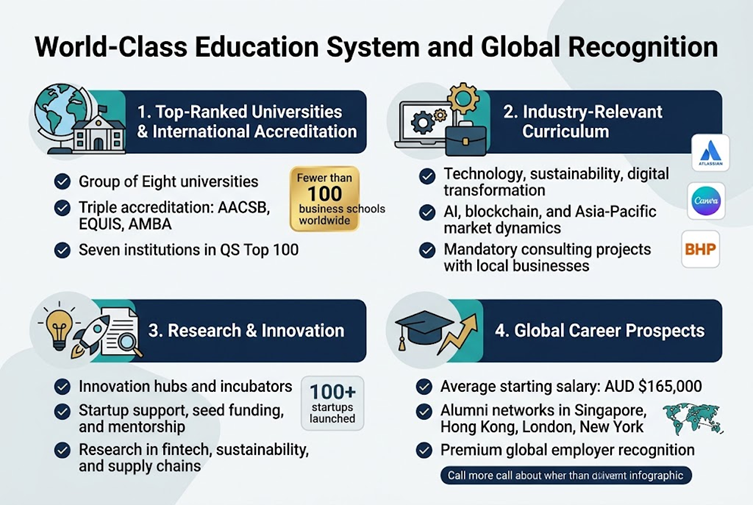
Australia hosts eight prestigious universities in the Group of Eight, with institutions like Melbourne Business School, Australian Graduate School of Management, and Queensland Business School consistently ranking among the world's top MBA programs. These Australian MBA programs hold triple accreditation from AACSB, EQUIS, and AMBA - a distinction shared by fewer than 100 business schools globally. The University of Melbourne's MBA ranks 26th worldwide according to Financial Times 2024 rankings, while UNSW Business School and Macquarie Graduate School of Management feature prominently in global MBA rankings.
Australian university rankings reflect their commitment to excellence, with seven institutions appearing in the QS World University Rankings top 100. This international recognition translates to immediate credibility when pursuing career opportunities across Asia-Pacific, Europe, and North America.
Industry-relevant Curriculum Designed for Modern Business Challenges
MS in Australia programs integrate cutting-edge technology, sustainability practices, and digital transformation strategies into their core curriculum. Business schools collaborate directly with companies like Atlassian, Canva, and BHP to design coursework addressing real-world challenges. Students engage with case studies from Australian mining giants, fintech startups, and renewable energy companies.
The curriculum emphasizes Asia-Pacific market dynamics, cross-cultural leadership, and emerging technologies like AI and blockchain. Programs include mandatory consulting projects with local businesses, providing hands-on experience while building professional networks. This practical approach ensures graduates possess immediately applicable skills rather than purely theoretical knowledge.
Strong Research Opportunities and Innovation Focus
Australian universities invest heavily in business research, with dedicated innovation hubs and incubators supporting student entrepreneurship. The Melbourne Accelerator Program has launched over 100 startups, while UNSW's Founders Program provides seed funding and mentorship for student ventures.
Research centers focus on sustainable business practices, fintech innovation, and supply chain optimization - areas where Australia leads globally. Graduate students collaborate on projects funded by government initiatives like the Australian Research Council, often resulting in published research and patent applications.
Globally Recognized Degrees Enhancing Career Prospects
Graduates from Australian MBA programs command premium salaries worldwide, with Melbourne Business School alumni earning average starting salaries of AUD $165,000. The degrees open doors to leadership positions across multinational corporations, with alumni networks spanning major financial centers in Singapore, Hong Kong, London, and New York.
International employers actively recruit from Australian campuses, recognizing the quality of education and diverse perspectives students bring. The combination of rigorous academics, practical experience, and global outlook makes Australian graduates highly sought after in competitive job markets.
Post-Study Work Opportunities and Immigration Pathways
Extended Work Rights for MBA and MS Graduates
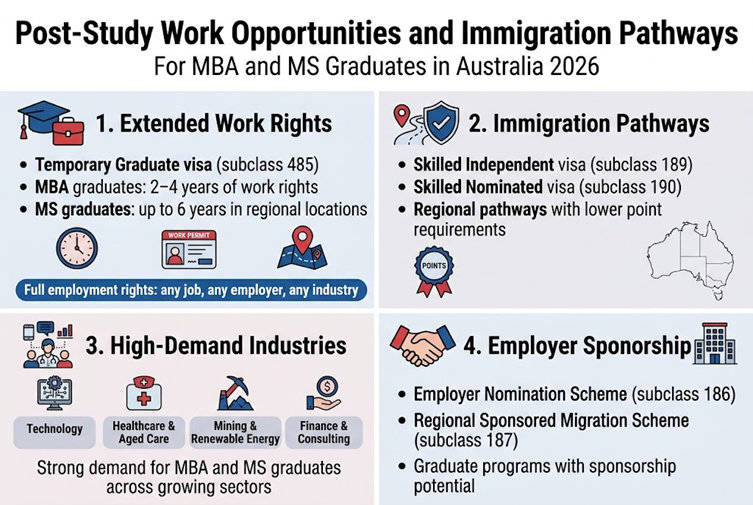
Australia offers some of the most generous post-study work visa Australia policies globally for MBA and MS graduates. Students completing an MBA in Australia 2026 or MS in Australia 2026 can access the Temporary Graduate visa (subclass 485), which provides substantial work opportunities after graduation.
MBA graduates typically receive 2-4 years of work rights, depending on their qualification level and study location. MS graduates in high-demand fields like engineering, IT, and healthcare often qualify for extended periods, with some regional study locations offering up to 6 years of work authorization. This extended timeframe allows graduates to gain valuable Australian work experience while exploring long-term career prospects.
The work visa comes with full employment rights - no restrictions on hours, employer changes, or industry sectors. Graduates can work in any field, start their own business, or pursue additional qualifications while maintaining their visa status.
Streamlined Permanent Residency Options
Australian immigration pathways for MBA and MS graduates have become increasingly accessible through various skilled migration programs. The General Skilled Migration program offers multiple routes including the Skilled Independent visa (subclass 189) and Skilled Nominated visa (subclass 190).
MBA graduates often qualify through business and management occupations on the skilled occupation list. MS graduates in STEM fields, healthcare, and engineering typically find their qualifications in high demand on priority occupation lists. Recent graduates benefit from additional points for Australian study experience and can leverage their post-study work period to meet residency requirements.
Regional study options provide even more advantages, with dedicated visa pathways and lower point requirements for permanent residency applications.
High Demand for Skilled Professionals in Growing Industries
Australia's economy shows strong demand for MBA and MS graduates across multiple sectors. The technology sector continues expanding rapidly, creating opportunities for data scientists, software engineers, and digital transformation specialists. Healthcare and aged care industries need qualified professionals due to population demographics.
Mining, renewable energy, and infrastructure development drive demand for engineering graduates. Financial services and consulting firms actively recruit MBA graduates for leadership roles in Australia's growing business landscape.
Government workforce planning data consistently shows shortages in skilled professional categories, making international graduates valuable additions to the Australian labor market.
Strong Employer Sponsorship Programs
Australian employers actively participate in sponsorship programs, offering direct pathways to permanent residency for qualified graduates. The Employer Nomination Scheme (subclass 186) and Regional Sponsored Migration Scheme (subclass 187) provide employer-backed visa options.
Major corporations, consulting firms, and tech companies have established graduate programs specifically designed to attract international talent. These programs often include visa sponsorship as part of employment packages, particularly for MBA graduates entering management consulting, investment banking, and corporate strategy roles.
Small to medium enterprises also participate in sponsorship programs, especially in regional areas where skill shortages are acute. Many employers view international graduates as valuable assets, bringing global perspectives and specialized knowledge to their operations.
Thriving Business Environment and Networking Advantages
Access to Asia-Pacific Markets and Trade Opportunities
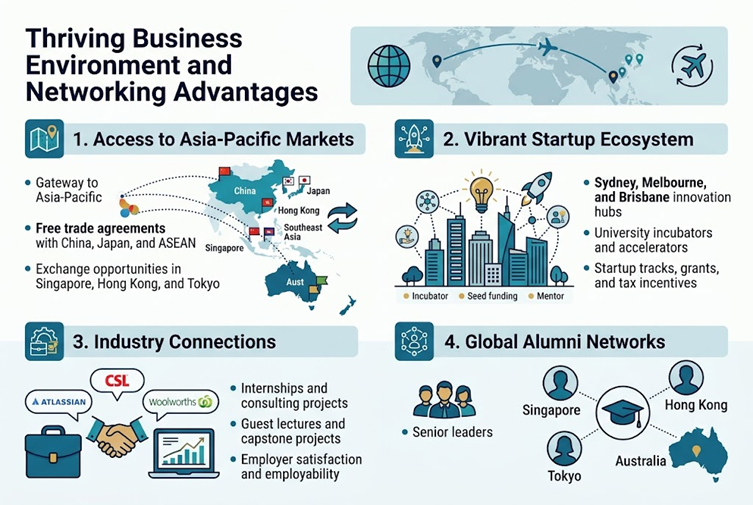
Australia serves as the perfect gateway for students pursuing MBA in Australia and MS in Australia programs who want to tap into the booming Asia-Pacific region. The country's strategic location puts you right in the middle of some of the world's fastest-growing economies, including China, Japan, South Korea, and Southeast Asian nations.
Australian universities have built strong partnerships with businesses across the region, giving students direct exposure to international trade dynamics. Many programs include case studies from real companies operating in these markets, and some even offer exchange opportunities with partner institutions in Singapore, Hong Kong, and Tokyo. This regional focus makes graduates incredibly valuable to multinational companies looking to expand their Asian operations.
The free trade agreements Australia has with countries like China, Japan, and ASEAN nations create numerous opportunities for graduates. Companies regularly recruit from Australian business schools specifically because they know these students understand the complexities of doing business across different cultures and regulatory environments in the region.
Vibrant Startup Ecosystem and Entrepreneurship Support
Australia's startup scene has exploded in recent years, creating an exciting environment for business education Australia students. Cities like Sydney, Melbourne, and Brisbane host thriving innovation hubs where students can connect with entrepreneurs, investors, and industry mentors.
Universities actively support student entrepreneurship through dedicated incubators and accelerator programs. Many schools offer courses taught by successful startup founders and provide seed funding for promising student ventures. The government also backs this ecosystem with various grants and tax incentives for innovative businesses.
Australian MBA programs often include entrepreneurship tracks where students work on real business ideas throughout their studies. Some universities have partnerships with major accelerators like Startmate and BlueChilli, giving students direct access to mentorship and potential funding opportunities.
Industry Connections Through Internships and Partnerships
The partnership between Australian universities and industry leaders creates unmatched opportunities for practical learning. Major corporations like Atlassian, CSL, and Woolworths regularly collaborate with business schools to offer internships, consulting projects, and guest lecture series.
Australian university rankings reflect this strong industry connection, with many programs ranking highly for employer satisfaction and graduate employability. Students get to work on real business challenges while still studying, building both their resumes and professional networks before graduation.
These partnerships extend beyond traditional internships. Many programs include capstone projects where student teams work directly with companies to solve actual business problems. This gives students hands-on experience and often leads to full-time job offers upon graduation.
Alumni Networks Spanning Multinational Corporations
Australian business schools have produced graduates who now hold senior positions in companies around the world. This creates powerful networking opportunities that extend far beyond Australia's borders. Alumni regularly return to campus for guest lectures, networking events, and mentoring programs.
The global reach of these networks means graduates can tap into opportunities in major financial centers like Singapore, Hong Kong, and Tokyo, as well as back in Australia. Many alumni actively help new graduates find positions in their companies, creating a strong support system that lasts long after graduation.
These connections prove especially valuable given Australia's strong business relationships with countries throughout the Asia-Pacific region. Alumni working in these markets often serve as bridges for new graduates looking to build international careers.
Competitive Program Costs and Financial Benefits
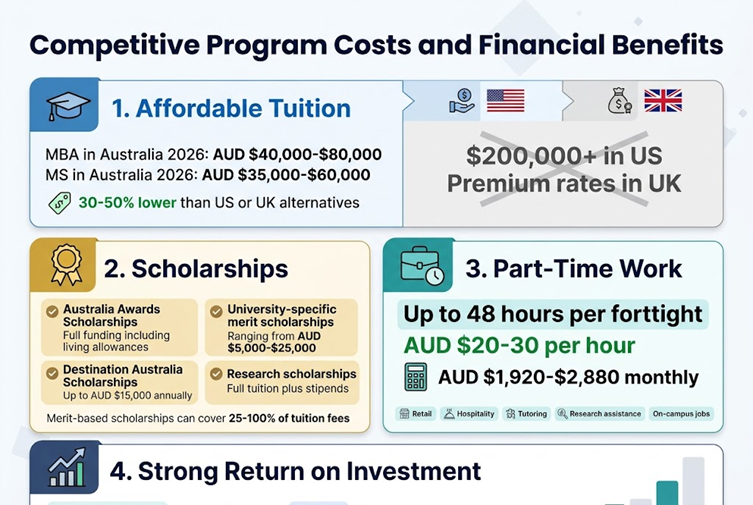
Affordable tuition fees compared to US and UK alternatives
Studying for an MBA in Australia or MS in Australia offers incredible value compared to traditional study destinations. While MBA programs in the US can cost upwards of $200,000 and UK universities charge premium rates, Australian institutions deliver world-class education at significantly lower costs.
Top-ranked Australian universities charge between AUD $40,000-$80,000 for MBA programs, representing savings of 30-50% compared to equivalent programs in the US or UK. Master's programs typically range from AUD $35,000-$60,000, making the master's degree Australia cost highly competitive. These figures include access to cutting-edge facilities, renowned faculty, and extensive industry connections.
Generous scholarship opportunities for international students
Australian universities actively court international talent through substantial scholarship programs. Merit-based scholarships can cover 25-100% of tuition fees, with many institutions offering partial funding even to students with solid academic records rather than just exceptional ones.
Major scholarship programs include:
- Australia Awards Scholarships: Full funding including living allowances
- Destination Australia Scholarships: Up to AUD $15,000 annually
- University-specific merit scholarships: Ranging from AUD $5,000-$25,000
- Research scholarships: Full tuition plus stipends for research-focused programs
Private organizations and industry partners also sponsor international students, particularly in high-demand fields like technology, engineering, and business analytics.
Part-time work allowances to offset living expenses
International students can work up to 48 hours per fortnight during studies, providing valuable income to offset living expenses. This work allowance recently increased from 40 hours, demonstrating Australia's commitment to supporting international students financially.
Average part-time earnings range from AUD $20-30 per hour, allowing students to earn AUD $1,920-$2,880 monthly. Many students find work in retail, hospitality, tutoring, or research assistance roles. Graduate students often secure higher-paying positions related to their field of study.
University campuses frequently offer on-campus employment opportunities, from library assistance to research projects, providing convenient work options that complement academic schedules.
Strong return on investment with high graduate salaries
MBA graduates in Australia command impressive starting salaries, with average packages ranging from AUD $85,000-$130,000 annually. Specialized fields like consulting, investment banking, and technology management offer even higher compensation.
MS graduates in STEM fields see particularly strong returns, with engineering, data science, and IT professionals earning AUD $70,000-$110,000 in entry-level positions. Career progression typically accelerates within 2-3 years, with many professionals achieving senior roles offering AUD $120,000+ annually.
|
Degree Type |
Average Starting Salary (AUD) |
5-Year Career Projection (AUD) |
|
MBA |
$85,000-$130,000 |
$140,000-$200,000+ |
|
MS Engineering |
$75,000-$95,000 |
$110,000-$150,000 |
|
MS IT/Data Science |
$80,000-$110,000 |
$130,000-$180,000 |
The strong Australian economy, coupled with skills shortages in many sectors, creates excellent salary negotiation power for qualified graduates.
Quality of Life and Cultural Experience
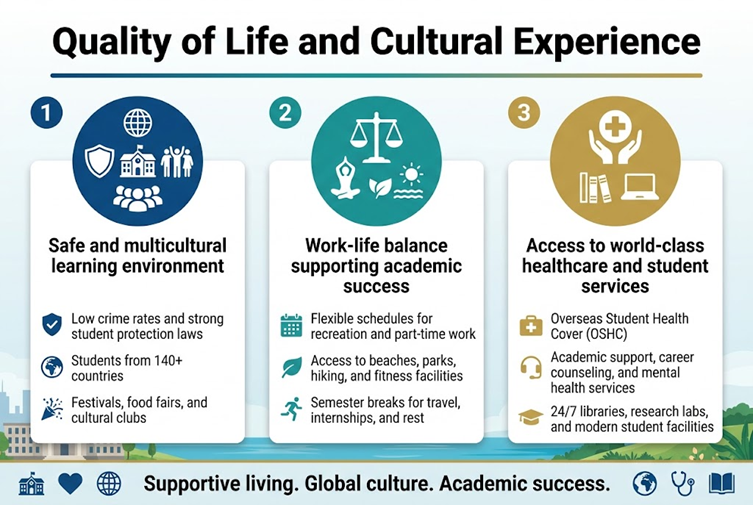
Safe and multicultural learning environment
Australia stands out as one of the safest study destinations globally, with extremely low crime rates and robust student protection laws. International students pursuing an MBA in Australia or MS in Australia can focus entirely on their studies without worrying about personal safety. Cities like Melbourne, Sydney, and Brisbane consistently rank among the world's most livable cities, creating an ideal atmosphere for academic pursuits.
The multicultural fabric of Australian universities enriches the learning experience significantly. Students from over 140 countries bring diverse perspectives to classroom discussions, group projects, and networking events. This cultural diversity mirrors the global business environment, preparing graduates for international careers. Australian campuses actively celebrate different cultures through festivals, food fairs, and cultural clubs, making international students feel welcomed and valued.
Anti-discrimination laws and comprehensive support systems ensure that every student receives equal treatment and opportunities. Universities have dedicated international student offices that provide orientation programs, cultural adjustment workshops, and ongoing support throughout the academic journey.
Work-life balance supporting academic success
Australian universities understand that stressed students don't perform optimally. The education system encourages a healthy balance between rigorous academics and personal well-being. Most Australian MBA programs and master's degrees are structured to allow students time for recreation, part-time work, and social activities.
The country's outdoor lifestyle naturally promotes mental and physical health. Students can easily access beaches, national parks, hiking trails, and recreational facilities during their free time. Many universities have state-of-the-art fitness centers, sports clubs, and wellness programs integrated into campus life.
Academic schedules typically include semester breaks that allow students to travel, intern, or simply recharge. This balanced approach leads to better academic performance and reduces burnout, which is particularly important for intensive programs like MBA studies.
Access to world-class healthcare and student services
International students enrolled in study abroad Australia benefits programs receive access to Australia's excellent healthcare system through Overseas Student Health Cover (OSHC). This comprehensive insurance covers doctor visits, hospital treatments, and prescription medications, ensuring students receive quality medical care when needed.
Universities provide extensive student services including academic support centers, career counseling, mental health services, and financial advice. Learning support teams help international students adapt to Australian academic standards and writing styles. Career services departments connect students with internship opportunities, job placement programs, and alumni networks.
Campus facilities rival those found anywhere in the world. Modern libraries with 24/7 access, collaborative study spaces, research labs, and technology centers support academic excellence. Many universities also offer on-campus accommodation with meal plans, creating a seamless living and learning environment for international students pursuing their master's degree Australia goals.
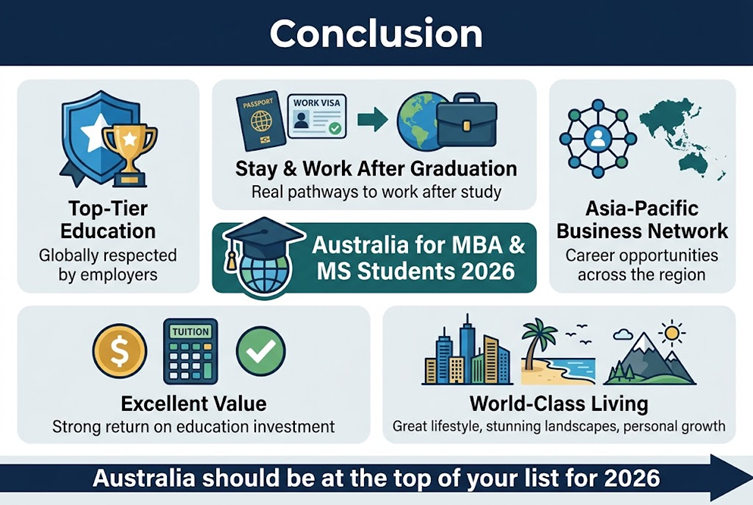
Australia has become a smart choice for MBA and MS students planning their academic journey. The country offers top-tier education that employers around the world respect, plus real pathways to stay and work after graduation. You'll also tap into a business network that spans across Asia-Pacific, setting you up for career opportunities you might not find elsewhere.
The financial side makes sense too – you get excellent value for your education investment while enjoying one of the world's best living experiences. From bustling cities to stunning landscapes, Australia gives you the perfect backdrop to grow both personally and professionally. If you're serious about advancing your career with a degree that opens doors globally, Australia should be at the top of your list.