
MBAGeeks Forum

CAT2026

14 hours ago

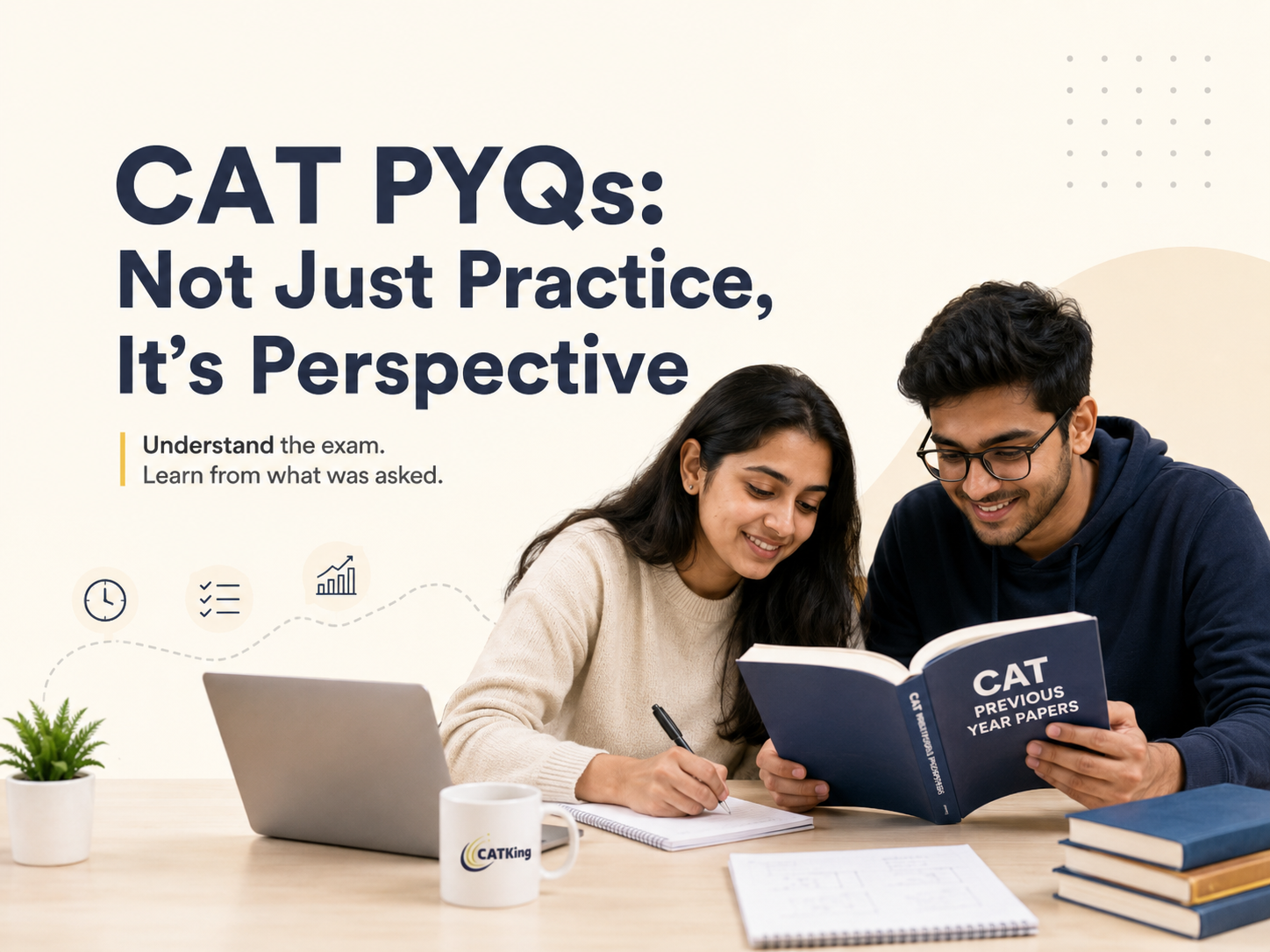
CAT Previous Year Papers: How Important Are CAT PYQs for Preparation?

Body

You can spend months solving questions from books, coaching material and test series, and you should. That is how you build your basics. But when you sit with an actual CAT paper, you sometimes realise that knowing a topic and handling that topic in CAT are not quite the same thing.

A question on percentages might be easy mathematically but still take too long because the trick is hidden in the wording. A DILR set might look manageable until you are eight minutes in and still don't know what to do with the information in front of you. That is where CAT previous year questions become useful. They show you the kind of decisions the exam has forced students to make.

And honestly, this is where many aspirants use PYQs badly. They solve a paper, check the answers, see a score and move on to the next one. The paper is over, so they think the job is done.

Usually, the more useful part starts after that.

Why did you spend twelve minutes on a question you eventually left. Which questions looked difficult but were actually manageable. Did you get something wrong because you didn't know the concept, or because you rushed through the calculation. Those are the things worth noticing.

CAT PYQs are important because they give you a reference point that regular practice material cannot fully give you. These questions actually appeared in CAT. You are not guessing what the exam might feel like, you are looking at what it has already asked students to do.

That does not mean you should solve old papers and ignore everything else. If your fundamentals are weak, PYQs alone will not fix that. You still need to learn concepts, practise them and take mocks. But previous year papers tell you whether the way you are preparing is actually translating into exam performance.

Quant is a good example. You may finish an entire Arithmetic module and feel reasonably comfortable with the chapter. Then you attempt CAT questions and realise that the maths was never the difficult part. Sometimes the challenge is spotting the approach quickly enough. Sometimes you know exactly what to do but take far too long doing it.

DILR makes this even more obvious. The problem is not always whether you can solve a set. Sometimes the bigger problem is realising that the set is going nowhere and leaving it before it takes away half your section.

That is something students usually understand only after they have spent enough time with real CAT questions.

The same applies to VARC. Reading a passage and understanding it is one thing. Choosing between two answer options that both sound convincing is another. Previous year papers help you see the difference.

So, how many years of CAT PYQs should you solve. There is no useful fixed number here. Solving ten years of papers badly is not automatically better than properly analysing five or six recent ones. Recent papers should obviously get more attention because they are closer to the current exam. Older questions are still useful for practice, especially when you want more exposure to Quant, DILR or verbal questions.

The bigger mistake is wasting all your best papers too early.

If you are starting from zero, don't immediately open a full CAT paper, get a terrible score and decide that CAT is impossible. Start using PYQs topic wise once you understand the basics. If you have just finished percentages, solve a few CAT questions based on percentages. See how the concept appears in the actual exam.

As your preparation improves, move towards sectional tests and then full papers.

When you finally attempt a complete previous year paper, treat it properly. Sit for the full test. Don't pause to watch a solution after every difficult question. Don't check whether your answer is right halfway through the section. Finish the paper first.

Then look at what happened.

I would personally divide the questions into a few rough groups. Questions you got right comfortably do not need much attention unless you used an unnecessarily long method. Questions you got right but took too much time on are interesting because they often show that your concepts are fine but your approach needs work.

The questions you got wrong are even more useful. Some of those will expose genuine gaps in your preparation. Others will be silly mistakes, rushed calculations or poor reading. You should not treat all wrong answers as the same problem.

Then there are questions you never attempted.

Look at those too. Sometimes you made the right decision by leaving them. Sometimes you skipped something that was actually easier than the question you spent ten minutes struggling with. That is where question selection becomes a real part of your preparation.

This is also why the CAT PYQ versus mock test debate does not make much sense. You need both.

Previous year papers show you what CAT has actually looked like. Mocks give you unfamiliar questions and force you to deal with uncertainty. Neither replaces the other.

A good mock can test your temperament and help you practise with questions you have never seen before. A previous year paper gives you something equally useful, a reality check. It can show you whether your understanding of the exam matches what CAT has actually asked students.

At CATKing, this is how we would recommend using PYQs. Don't save them for the final month, but don't burn through every paper in the first few weeks either. Use some questions while learning topics. Keep some papers for sectional practice. Save a few recent papers for proper timed attempts later in your preparation.

And when you analyse a paper, don't just write down your score.

Ask what actually happened during those two hours. Where did you lose time. Which questions trapped you. What did you misread. Which section felt harder than it really was because you made a bad decision early on.

That kind of analysis can change your preparation much more than simply solving another hundred random questions.

CAT is not an exam where you need to prove that you can solve everything on the screen. You won't. Nobody does.

You need to recognise the questions that are worth your time and avoid getting dragged into the ones that aren't.

That is probably the biggest reason CAT previous year papers matter. They slowly teach you how the exam behaves. You start noticing things that are hard to learn from a chapter or a formula sheet. You become better at judging questions, managing time and understanding your own mistakes.

So yes, solve CAT PYQs. Solve enough of them to understand the exam, not just to say you have completed a certain number of years.

And once you finish a paper, don't be in a hurry to open the next one. Spend some time figuring out what that paper was trying to tell you.

Tags: CAT PYQs, CAT previous year questions, CAT previous year papers, CAT PYQ questions, CAT PYQ strategy, importance of CAT PYQs, how important are CAT previous year questions, how to use CAT PYQs, how to solve CAT previous year questions, CAT previous year papers strategy, CAT PYQ preparation strategy, CAT PYQ analysis, CAT previous year paper analysis, CAT PYQ practice, CAT PYQ for CAT preparation, CAT previous year questions for beginners, CAT PYQs for beginners, how many years of CAT PYQs should I solve, how many CAT previous year papers should I solve, how many CAT PYQs are enough, should I solve CAT previous year papers, are CAT PYQs important, are CAT previous year questions enough for CAT, CAT PYQs vs mocks, CAT mock tests vs previous year papers, difference between CAT PYQs and mock tests, CAT PYQs or mock tests, should I solve CAT PYQs before mocks, when should I start solving CAT PYQs, best time to solve CAT previous year papers, how to analyse CAT previous year papers, how to analyse CAT PYQs, CAT PYQ mistakes analysis, CAT PYQ question selection, CAT exam question selection strategy, CAT PYQ time management, CAT previous year paper time management, CAT preparation with PYQs, CAT preparation strategy using previous year questions, CAT exam preparation strategy, CAT 2026 preparation, CAT 2026 PYQs, CAT 2026 previous year questions, CAT exam pattern through PYQs, CAT exam difficulty level PYQs, CAT actual exam questions, real CAT questions, actual CAT previous year papers, CAT paper practice, CAT exam practice questions, CAT question paper analysis, CAT past year papers, CAT solved previous year papers, CAT PYQ solutions, CAT previous year paper solutions, CAT question bank, CAT preparation from zero, CAT beginner strategy, CAT preparation for beginners, CAT fundamentals and PYQs, CAT concepts and PYQs, topic-wise CAT PYQs, section-wise CAT PYQs, full-length CAT previous year papers, CAT sectional PYQs, CAT topic-wise previous year questions, Quant CAT PYQs, QA previous year questions CAT, CAT Quant previous year questions, CAT Quant PYQ strategy, Arithmetic CAT PYQs, percentage questions in CAT, CAT percentage PYQs, CAT Arithmetic PYQs, CAT Algebra PYQs, CAT Number System PYQs, CAT Geometry PYQs, CAT Modern Math PYQs, CAT Quant time management, CAT Quant question selection, how to solve CAT Quant questions faster, CAT Quant approach, CAT Quant preparation strategy, DILR CAT PYQs, CAT DILR previous year questions, CAT DILR PYQ strategy, CAT DILR set selection, how to choose DILR sets in CAT, CAT DILR question selection, CAT DILR time management, how to leave difficult DILR sets, CAT DILR preparation through PYQs, CAT DILR practice strategy, CAT DILR actual questions, VARC CAT PYQs, CAT VARC previous year questions, CAT VARC PYQ strategy, CAT RC previous year questions, CAT reading comprehension PYQs, CAT verbal ability PYQs, CAT VARC preparation strategy, CAT VARC question selection, CAT RC option elimination, CAT previous year RC passages, CAT sectional strategy, CAT exam sections, CAT Quant DILR VARC strategy, CAT time management strategy, CAT exam temperament, CAT exam decision making, CAT question selection skills, CAT speed and accuracy, CAT accuracy improvement, CAT silly mistakes, CAT preparation mistakes, CAT exam mistakes, common mistakes while solving CAT PYQs, mistakes students make with CAT previous year papers, how to avoid mistakes in CAT preparation, CAT paper analysis strategy, post-mock analysis for CAT, CAT test analysis, CAT score analysis, CAT attempt analysis, CAT wrong answer analysis, CAT unattempted questions analysis, CAT time spent per question, CAT question prioritisation, CAT difficult questions strategy, CAT easy questions identification, CAT exam traps, CAT question traps, CAT exam decision making skills, CAT preparation improvement, CAT performance improvement, CAT score improvement, improve CAT accuracy, improve CAT speed, improve CAT question selection, how to improve CAT performance, CAT practice plan, CAT study plan with PYQs, CAT revision with previous year questions, CAT PYQ revision strategy, recent CAT PYQs, latest CAT previous year papers, old vs recent CAT PYQs, recent CAT papers importance, CAT papers from last 5 years, CAT papers from last 10 years, CAT previous year papers last 5 years, CAT previous year papers last 10 years, how to use old CAT papers, how to use recent CAT papers, CAT exam trends through PYQs, CAT preparation material, CAT coaching material vs PYQs, CAT books vs previous year questions, CAT practice material, CAT mock analysis, CAT PYQ analysis vs mock analysis, full-length CAT mock tests, CAT test series, CAT exam reality check, understand the CAT exam through PYQs, learn CAT exam pattern through previous year papers, understand CAT difficulty through PYQs, CAT question solving approach, CAT smart preparation, CAT strategic preparation, CAT effective preparation, CAT preparation without wasting PYQs, save CAT PYQs for later, when to attempt full CAT papers, how to attempt CAT previous year papers, simulated CAT paper attempt, timed CAT PYQ practice, CAT exam simulation, CAT full paper strategy, CAT paper solving strategy, CAT preparation phases, CAT topic-wise practice strategy, CAT sectional test strategy, CAT full-length test strategy, CAT preparation roadmap, CAT exam strategy for aspirants, MBA entrance exam preparation, CAT Aspirants, Common Admission Test preparation, Common Admission Test previous year questions, Common Admission Test PYQs, CAT exam preparation in India, MBA entrance exam PYQs, CATKing CAT preparation, CATKing CAT PYQs, CATKing previous year questions, CATKing CAT strategy, CATKing CAT preparation tips, catking mock analysis, CATKing MBA preparation, CAT preparation guidance, CAT preparation tips, CAT expert advice, CAT coaching guidance, how toppers use CAT PYQs, CAT topper strategy for previous year questions, best cat preparation strategy, smart way to prepare for CAT, realistic CAT preparation strategy, CAT exam preparation guide, CAT PYQ guide, complete guide to CAT previous year questions, why CAT previous year questions matter, benefits of solving CAT PYQs, importance of solving CAT papers, advantages of CAT previous year papers, CAT PYQs for understanding exam pattern, CAT PYQs for time management, CAT PYQs for question selection, CAT PYQs for improving accuracy, CAT PYQs for improving speed, CAT PYQs for identifying weaknesses, CAT PYQs for understanding mistakes, CAT PYQs for exam strategy, CAT PYQs for sectional preparation, CAT PYQs for mock preparation, CAT PYQs for beginners and advanced students, how many times should I solve CAT PYQs, should I repeat CAT previous year questions, can I crack CAT by solving previous year papers, can CAT PYQs predict CAT questions, do CAT questions repeat, are CAT PYQs enough for CAT preparation, should beginners solve CAT PYQs, should I solve CAT PYQs topic-wise, should I attempt CAT PYQs as mocks, how to balance CAT PYQs and mock tests, how to review CAT PYQs, what to learn from CAT previous year papers, what do CAT PYQs teach you, how to identify weak areas using CAT PYQs, how to improve question selection using CAT PYQs, how to improve CAT time management using PYQs, CAT 100 percentile preparation strategy, CAT high percentile preparation, CAT 99 percentile preparation strategy, CAT 95 percentile preparation strategy, CAT exam strategy 2026, CAT preparation tips 2026, CAT study strategy 2026, CAT exam preparation guide 2026, CAT previous year papers PDF, CAT PYQ PDF, CAT previous year question papers with solutions, CAT previous year papers with answers, CAT past papers with solutions, CAT preparation resources, CAT online preparation, CAT self preparation, CAT self-study strategy, best resources for CAT preparation, CAT practice questions, CAT exam question analysis, CAT exam strategy based on previous year papers, CAT learning from mistakes, CAT practice and analysis, CAT performance analysis, CAT exam readiness, CAT preparation reality check, CAT exam mindset, CAT strategic question solving, CAT adaptive preparation strategy, CAT preparation based on strengths and weaknesses, CAT exam practice strategy, how to prepare for CAT effectively, how to prepare smartly for CAT, CAT preparation guide for serious aspirants, CAT preparation advice for students, CAT previous year question strategy for MBA aspirants, best way to use CAT previous year papers, complete CAT PYQ strategy

Create custom feed

Make private

Communities (Select a community to add to your custom feed).