



This is the heart of the forum—where offbeat thoughts, campus memes, random rants, success stories,...

4 months ago
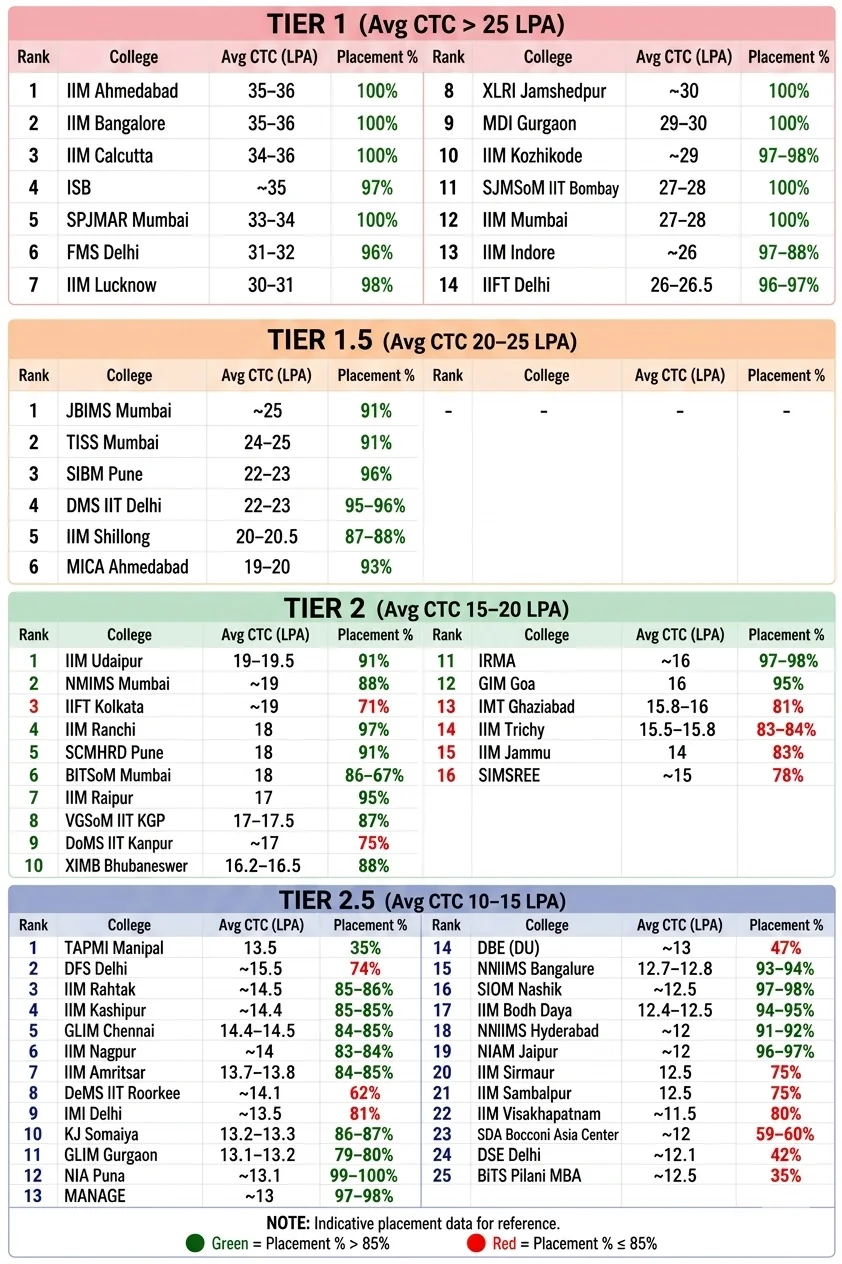
Body
While salary is the most visible metric, it is merely the tip of the iceberg. Each tier represents a different ecosystem:
-
Tier 1 (The Elite League): These institutions are the gold standard. They command global brand recognition and offer unparalleled access to top-tier consulting, investment banking, and leadership roles. The "brand value" here extends far beyond the immediate salary, offering a lifelong network that facilitates career acceleration.
-
Tier 1.5 (The Bridge Builders): These are prestigious, high-performing institutes that sit just below the elite. They often offer specialized domains (e.g., Finance in Mumbai, Operations in niche schools) and compete heavily for top recruitment spots, often punching above their weight in specific sectors.
-
Tier 2 (The Career Accelerators): These are well-established institutions with solid corporate relationships. They are ideal for students seeking a professional transition or functional pivot. While they may not have the global brand pull of a Tier 1 school, their curriculum and industry connection provide excellent long-term career stability.
-
Tier 2.5 (The Strategic Entry Points): Often recognized for regional dominance or specific industry niches, these schools provide a gateway into the management profession. Success here is frequently highly dependent on student initiative—the network you build and the extracurricular projects you take on become just as important as the campus placement itself.
Why Placements Aren't Everything
It is tempting to choose a college based solely on the highest average CTC. However, savvy aspirants look deeper:
-
Sustainability: Are recruiters coming back year after year? Consistency is a better predictor of long-term value than a one-time peak in salary.
-
The ROI Gap: A high salary at a high-fee college vs. a decent salary at a low-fee college changes your financial runway post-MBA.
-
Career Trajectory: An MBA is a 30-year investment. Consider the alumni reach, faculty mentorship, and the culture of the school things that don’t appear on a placement broc*ure but define your growth a decade down the line.
3 Replies
-
I think people forget the 'location' factor in Tier 2/2.5 schools. Being in a corporate hub like Mumbai or Delhi often creates networking opportunities that don't show up in the average CTC but make a huge difference in long-term growth.
-
The placement percentage vs. salary trade-off is the real trap. A school with 100% placement at 15 LPA is often a safer bet than a school that promises 30 LPA but has a shaky placement percentage. Stability wins in this economy
-
Tier 1.5' list is becoming more blurred. Some of these schools are starting to hit Tier 1 CTC numbers in specific domains like Finance or Product. Are we reaching a point where 'Tiers' are becoming obsolete in favor of 'Domain Rankings'?