


Crack the CAT, together. Welcome to the ultimate prep zone for CAT aspirants. From 99 percentilers s...

22 hours ago
Body
Why CATKing is the best online CAT Coaching for CAT 2027?
We understand how important it is for a student to choose which CAT Coaching they should join from the plenty of options available.
Hence, we made this guide to help you a little and ensure you why CATKing is the best coaching for you in India.
Why most students feel unsatisfied with their coaching classes?
Every year, thousands of students join coaching classes but their results are not as good as they expected and the reason for it is not always student’s lack of preparation.
Sometimes it is also-
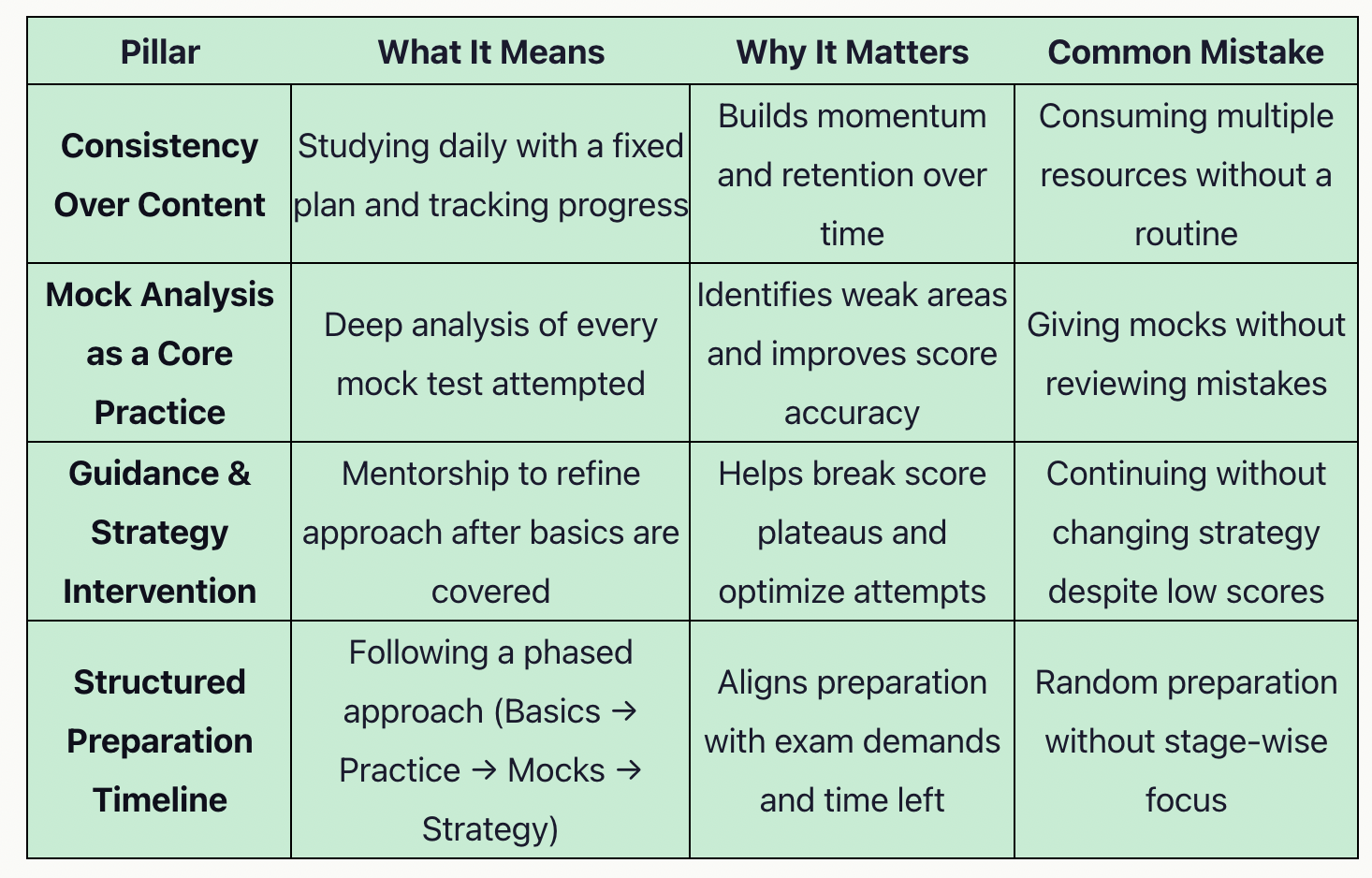
If they don’t follow a structured preparation plan and end up using too many resources
Lack of consistent preparation. Lectures, mocks and revisions consistently is the key
If they don’t get proper guidance on how to analyse their mocks.
If they are clueless about their preparation journey, or lack of mentorship.
How students prepare at CATKing?
At CATKing, all the students follow these pillars of preparation for their effective CAT preparation.
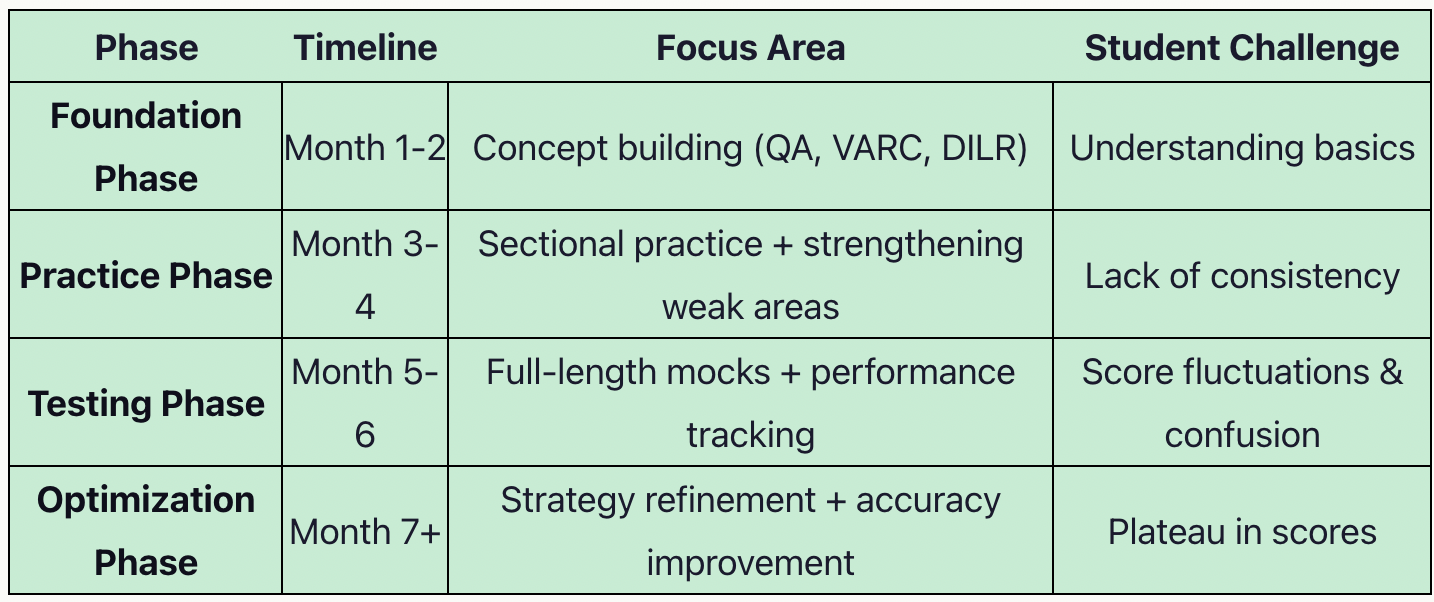
CATKing’s Roadmap for students preparing for CAT 2027 –
Why CATKing is the Best Coaching in India?
Industry experts teach as faculty hence students learn from faculties who have already aced the exam
India’s only coaching which has provided IIM Indore based pattern mocks with Real CAT Interface.
Students don’t only get lectures but also mentorship and guidance throughout their journey
CATKing is a mentorship driven CAT coaching platform, and it focuses on providing best faculties, mock strategies and end to end preparation for its students.
Why you should choose CATKing for your CAT preparation?
Building Consistency (Daily Structure)
· Regular live classes create a fixed study routine
· Helps avoid inconsistency one of the biggest reasons students underperform
Mock Strategy
The focus is on:
· How to attempt
· What to skip
· How to analyze mistakes
Along with this, mock discussions and PYQs are approached from a topper’s perspective:
· Why a question was attempted
· Why something was skipped
· What the ideal decision-making looks like under pressure
This shifts preparation from: “solving more questions” to “making better decisions in the exam” which leads to actual improvements in scores
Structured Learning (LOD-Based)
Preparation follows a level-based system:
· LOD 1 → Basics
· LOD 2 → CAT-level
· LOD 3 → High difficulty
Multiple batches based on preparation stage
It Ensures:
· Better pacing
· Reduced overwhelm
· Learning aligned with your level
Doubt Solving System
· Doubts are typically resolved within 24 hours through the discussion forum
· Selected doubts are taken up in daily live classes for deeper understanding
· Remaining doubts are addressed through detailed video solutions
Community support & Updates
Active student community with regular updates, discussions, and peer interaction
Frequent communication around:
· Study plans
· Important topics
· Exam strategy
Since final converts depend heavily on GDPI performance, this phase becomes as important as CAT itself
GDPI Preparation
Dedicated GDPI preparation covering Group Discussions, Personal Interviews, and WAT
Regular sessions focused on:
· Interview questions
· Current affairs
· Profile-based discussions
· Practice through mock interviews and peer discussions
· Access to recorded sessions and resources for revision
Testimonials-
1. Darshan Shete - CAT25, 94.38%ile.Sharing the full breakdown of how catking helped me get here.
Started from live classes for basics, this is where the foundation actually got built properly instead of just being rushed through. Moved into advanced practice and mocks after that, standard progression but it was consistent which mattered more than I expected going in.
The bootcamps right before the exam were honestly the turning point for me, not exaggerating. Faculty + dashboard content + support staff all showed up in that stretch in a way that made prep feel manageable instead of chaotic (and this is coming from someone who was at 55%ile before this, so take that as context for how much of a jump this was).
Rahul sir specifically made a big difference too, the motivation part isn't just a throwaway line, it actually mattered during the last stretch when things get mentally exhausting.
Went from 55%ile to 94.38%ile because of this. Genuinely grateful to him and the entire team, proud to say I was a catking student.
2. Anish Pathak- GD/PI was hands down one of the most crucial phases of my whole MBA journey, and I ended up joining catking GD/PI course for it.
what helped most was the structured approach not just clarity in how to frame answers but also handling pressure during mock interviews, which is honestly a totally different skill from just knowing the content mentors didn't just focus on what to say, more on how to actually think through a question, which took some getting used to but ended up making a difference to how I approached the actual interviews.
the dockets and questionnaires were part of it too. questionnaires got me back into my undergrad subjects properly, dockets helped me figure out which field I actually wanted to talk about and how to defend it if someone pushed back.
mock interviews were probably the most useful piece for me personally, feedback was specific enough that I could actually work on it between sessions instead of just repeating the same mistakes alumni sessions gave me a better sense of the culture at SPJIMR too, which came in handy when the "why SPJIMR" question came up for real.
converted SPJIMR in the end
Frequently asked questions
1. What is the best CAT preparation strategy for beginners?
The best CAT preparation strategy for beginners starts with building strong fundamentals in QA, VARC, and DILR. Focus on understanding concepts first, then gradually move to practice questions and sectional tests. Consistency is key study daily with a structured plan. Regular mock tests and analysis will help track progress and improve performance.
2. How many months are required to prepare for CAT effectively?
Ideally, 8–10 months are sufficient for effective CAT preparation. This allows time for concept building, practice, mock testing, and strategy refinement. Beginners may need more time depending on their starting level. A well-planned timeline ensures balanced preparation without burnout.
3. Are mock tests really important for CAT preparation?
Yes, mock tests are one of the most important parts of CAT preparation. They simulate the actual exam environment and improve time management skills. More importantly, analyzing mocks helps identify weak areas and avoid repeated mistakes. Consistent mock practice leads to significant score improvement.
4. Can I crack CAT with self-study alone?
Yes, CAT can be cracked with self-study if you are disciplined and consistent. You need a clear study plan, quality resources, and regular mock practice. However, many students struggle with direction and consistency without guidance. Coaching or mentorship can help streamline preparation and improve efficiency.
5. Which section is the toughest in CAT?
The difficulty of CAT sections varies from student to student. Many find DILR challenging due to its unpredictable nature, while others struggle with VARC comprehension. QA can also be tough for students weak in math fundamentals. The key is to identify your weak section early and work consistently on it.
6. How many hours should I study daily for CAT?
Studying 2–4 hours daily is sufficient if done consistently and with focus. Quality of study matters more than quantity, so avoid passive learning. Increase study hours gradually as the exam approaches. Regular revision and mock analysis should also be part of your daily routine.
7. Is online coaching enough to crack CAT?
Yes, online coaching is more than enough for CAT preparation if used properly. It offers flexibility, access to quality content, and mock tests. However, success depends on how consistently you follow the plan and analyze your performance. Discipline and self-motivation play a crucial role.
8. When should I start taking mock tests for CAT?
You should start taking mock tests after completing basic concepts, usually within 2–3 months of preparation. Begin with one mock every two weeks, then gradually increase frequency. In the final months, take 1–2 mocks per week. Always focus on detailed analysis after each mock.
9. How can I improve my CAT percentile quickly?
Improving CAT percentile requires focused mock analysis and strategy refinement. Identify weak areas and work specifically on them instead of studying everything randomly. Learn time management and question selection techniques. Consistency and smart preparation lead to faster improvement.
10. Do I need coaching for GDPI after CAT?
Yes, GDPI preparation is crucial for final MBA selection after CAT. It involves interview skills, current affairs, and communication practice. Many students underestimate this stage and lose top college opportunities. Structured GDPI guidance helps improve confidence and conversion chances.