



This is the heart of the forum—where offbeat thoughts, campus memes, random rants, success stories,...

6 hours ago
Body
One of the most frustrating experiences for an MBA aspirant is this:
“I understood the passage clearly, but my RC answers are still wrong.”
This problem is far more common than weak comprehension.
In most cases, the real cause is tone exaggeration, not lack of understanding.
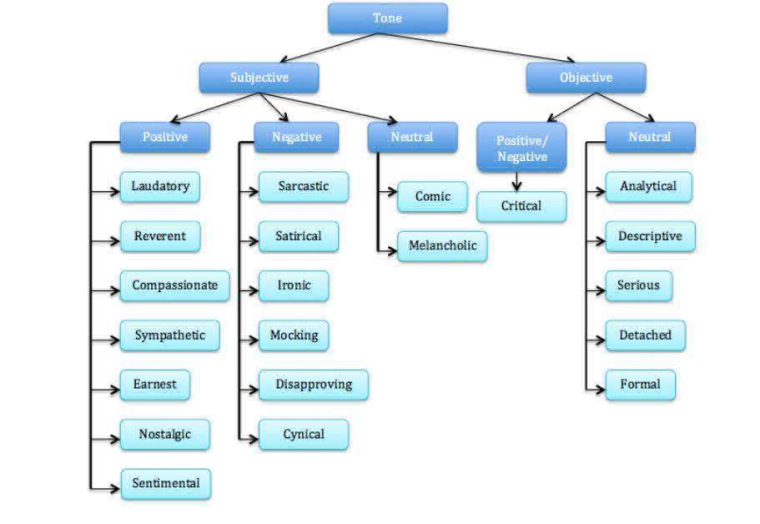
Reading Comprehension in MBA entrance exams is not about grasping the topic alone. It is about identifying how strongly or weakly the author is making a claim.
That strength is decided by a small set of words most students overlook.
1. The Silent RC Killers: Qualifiers
Examiners deliberately insert qualifiers into passages. These are words that limit, soften, or weaken a statement.
Common qualifiers you’ll repeatedly see in RC passages:
-
Rarely
-
Often
-
Somewhat
-
Limited
-
Few
-
Generally
-
Tends to
These words are never accidental. They control the tone and scope of the argument.
When students ignore qualifiers, they convert moderate claims into extreme conclusions - and that’s where marks are lost.
2. How Tone Exaggeration Happens
Let’s look at a typical RC-style sentence.
“The policy has rarely succeeded in addressing rural unemployment.”
What the author is saying:
-
The policy sometimes works
-
Success is uncommon, not impossible
What many students assume:
-
The policy never works
-
The policy is a complete failure
Now look at the kind of option students wrongly select:
-
“The author believes the policy is entirely ineffective.”
This option feels logical, but it goes beyond the text.
RC questions punish over-interpretation more than under-interpretation.
3. Extreme Options Are Designed as Traps
RC option setters know a key student weakness:
Students remember the idea but forget the exact wording.
So they design options with:
-
Always
-
Never
-
Completely
-
Entirely
-
All
-
None
These words make an option sound confident and decisive. That confidence attracts students.
But if the passage used qualifiers, extreme options are almost always wrong.
A useful rule:
If the passage sounds balanced, the correct option will sound balanced too.
4. Memory-Based Reading vs Text-Based Reading
Another major cause of RC errors is over-trusting memory.
Students often read a paragraph, understand it well, and move on. When questions appear, they answer based on recall rather than rechecking the wording.
RC questions are not testing memory. They are testing precision.
Example:
You may remember that the author was “critical” of an idea.
But the passage might say the author was cautiously skeptical.
Those two are not the same in RC logic.
Strong RC performers don’t rely on what they remember. They go back and verify:
-
Did the author say “rarely” or “never”?
-
Did the author criticize or merely question?
-
Did the author reject or just limit?
5. Why RC Rewards Conservative Thinking
MBA entrance exams reward defensible answers, not bold ones.
If an option slightly understates the author’s position but stays within the passage, it is safer than an option that overstates it.
That is why correct RC options often feel:
-
Less dramatic
-
More cautious
-
Less opinionated
Students who look for “strong opinions” in RC usually fall into traps.
6. A Practical RC Self-Check (Interactive)
Before locking an RC answer, ask yourself:
-
Did the passage use qualifiers?
-
Is this option stronger than the passage?
-
Am I adding certainty that the author never claimed?
-
Can I point to a specific word in the passage that justifies this option?
If you cannot anchor the option to an exact word or phrase, it is likely wrong.
Most RC mistakes are not caused by poor reading skills.
They are caused by tone inflation.
Qualifiers exist to protect the author from making absolute claims.
Ignoring them forces meanings the passage never intended.